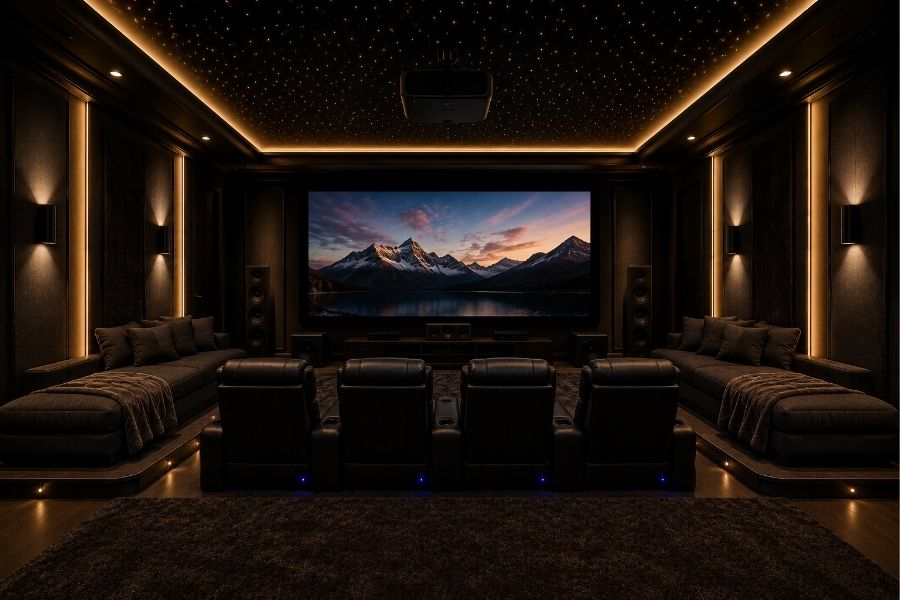
A home theatre done right is one of the most transformative upgrades you can make to a home. Done wrong — wrong room, wrong gear, wrong acoustics — it’s an expensive disappointment that sits unused. This guide is everything we wish more clients asked us before they started spending.
After 12 years of home theatre installations across Nellore and Hyderabad — from compact 2-seater media rooms to 20-seat private cinemas — our AV team has seen every mistake and every triumph. This guide collects the decisions that matter most, in the order you should make them.
Step 1: Define the Room First, Buy Gear Second
This is where most people get it backwards. They buy a projector or a speaker system they’ve read about, then try to fit it into their space. The room should always come first — because the room dictates everything.
Key room considerations before any purchase decision:
Room dimensions: The ideal home theatre has a length-to-width ratio of roughly 1.6:1. A 12×20 ft room is nearly perfect. Avoid square rooms — they create bass resonance problems (known as room modes) that are expensive to fix acoustically after the fact. Minimum recommended size for a true cinematic experience: 12×16 ft.
Ceiling height: A ceiling of at least 9.5 ft is required for proper Dolby Atmos overhead speaker placement. Lower ceilings compromise the 3D audio experience significantly.
Ambient light: How much natural light enters the room? This single factor determines whether you need a projector or a high-brightness display. A room you can fully blackout opens up a much wider (and often more cost-effective) projector range.
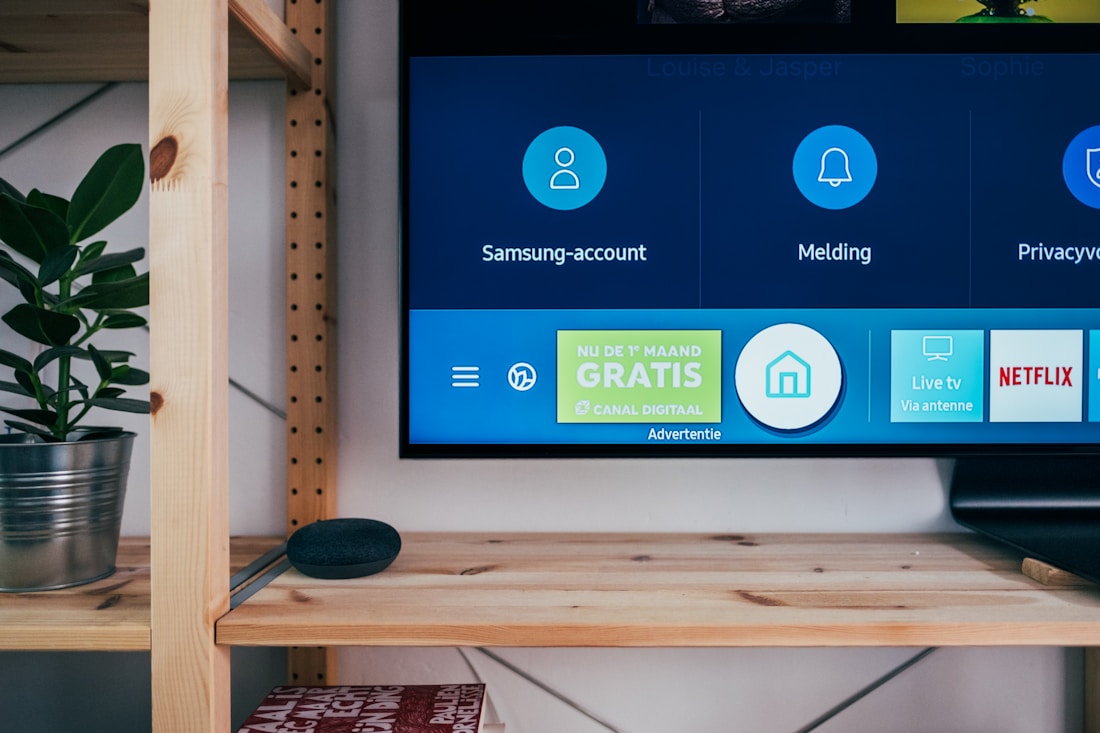
Step 2: Projector vs. Large Screen TV — The Real Decision
This is the question we’re asked most often. The honest answer depends entirely on three factors: screen size ambition, room lighting, and budget.
If you want a screen larger than 100 inches: A 4K laser projector is significantly more cost-effective than an equivalent TV. A 120-inch projected image from a quality 4K projector costs roughly ₹3–6L for the projector alone — versus ₹15–25L+ for a comparable 120-inch commercial display.
If your screen ambition is 85–100 inches: A premium QLED or OLED TV typically delivers superior peak brightness, better HDR performance in mixed-light conditions, and simpler day-to-day operation. For living rooms that serve as both a family TV area and an occasional cinema space, a high-quality TV is often the right answer.
If you can fully blackout the room: A 4K laser projector almost always wins on image size, cinematic atmosphere, and rupee-per-inch value.
Brands our team installs: Sony, JVC, and Epson for projectors. Samsung QLED and LG OLED for display screens. Each has a specific use case — we match the technology to the room, not the other way around.
Step 3: Understand Audio Formats Before Buying Speakers
Most home theatre buyers focus disproportionately on the screen and underinvest in audio. This is the single most common regret we hear. In a cinema, 70% of the emotional impact comes from sound — the score, the bass, the directionality of sound effects. The same is true at home.
The format hierarchy in 2025:
Dolby Atmos (7.1.4 minimum): Object-based 3D surround that places sound anywhere in three-dimensional space — including overhead. This is the standard we recommend for any serious home theatre build. The difference between Atmos and a standard 5.1 system is immediately audible to anyone, audiophile or not.
DTS:X: Dolby Atmos’s main competitor. Similarly object-based, similarly immersive. Most quality AV receivers support both.
Standard 5.1 / 7.1: Perfectly capable for casual use, but if you’re building a dedicated room, stepping up to Atmos is worthwhile — the cost difference is meaningful but not prohibitive.
Step 4: Acoustic Treatment Is Not Optional
This is the most consistently underbudgeted element of Indian home theatre projects. A ₹10L speaker system in an untreated room will consistently sound worse than a ₹3L system in a properly treated room. Acoustics are not a luxury — they are the foundation on which every other investment sits.
What acoustic treatment achieves:
Bass traps (corners of the room): Absorb low-frequency energy that would otherwise build up and cause boomy, muddy bass reproduction.
Absorption panels (first reflection points): Reduce early reflections from walls and ceiling that cause smearing and poor stereo imaging.
Diffusers (rear wall): Scatter sound energy rather than absorbing it — maintaining a sense of space and liveliness without harshness.
In our builds, we design fabric-wrapped panels that double as décor. A well-treated room can look like a luxury cinema while performing like one — the acoustic panels don’t need to look industrial.
Step 5: Seating — The Element Clients Underestimate Most
You will spend far more hours in your home theatre seats than you realise when planning. Uncomfortable seating — even in a technically perfect room — will make the space feel like a chore rather than a retreat.
Our recommendations: For a dedicated room, purpose-built home theatre recliners with USB charging, cupholder armrests, and power reclining are worth the investment. For tiered seating in larger rooms, the first row should be at screen-centre height, with each subsequent row elevated 8–12 inches.
Minimum recommended distances from screen: for a 120-inch screen, the first seat should be no closer than 12–14 feet for comfortable 4K viewing without pixelation.
Step 6: Smart Control — One System, Everything
A modern home theatre should operate with a single touch. Projector, screen (motorised), audio receiver, lighting, climate control, and streaming devices should all respond to a single remote or app command — a “Movie” scene that dims lights, drops the screen, fires the projector, and sets the audio mode simultaneously.
Systems we install: Crestron and Control4 for premium builds; more accessible options like Logitech Harmony and Apple HomeKit-compatible components for mid-range builds. The goal is always simplicity at the point of use, regardless of the complexity behind the wall.
Realistic Budget Ranges (2025, Nellore & Hyderabad)
Entry-level media room (4–6 seats, 100-inch projection, 5.1 audio): ₹6–9L all-in including installation.
Signature theatre (6–8 seats, 120-inch 4K laser, Dolby Atmos 7.1.4, full acoustic treatment): ₹14–22L.
Prestige cinema (8–12 seats, 4K/8K laser, Atmos 9.2.4, custom seating, full room build): ₹35L+.
These ranges include equipment, acoustic treatment, custom seating, smart control, and complete installation. They do not include civil/construction work if a new room is being built — that is quoted separately based on site.
Planning a home theatre in Nellore or Hyderabad? We offer free site visits — our AV team will assess your room, discuss your brief, and give you a detailed proposal with no obligation and no surprises.
Ready to put these ideas into action? Our design team is here to help you create a space that's uniquely yours.
Get Free Consultation